The phrase Digital Humanities thus describes not just a collective singular but also the humanities in the plural, able to address and engage disparate subject matters across media, language, location, and history.
Burdick et al. “One: From Humanities to Digital Humanities,” in Digital_Humanities (Cambridge, MA: MIT Press, 2012), 24.
I think this quote perfectly describes how I perceive digital humanities. Instead of being just a “subject,” for me, digital humanities is more of a way of assembly and analysis. That is, DH does not exist in isolation; it lays on top of existing subjects, providing new perspectives to many long-existing subjects.
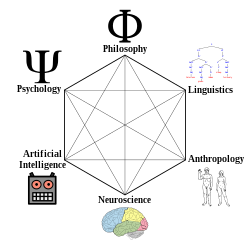
As a person with a genuine interdisciplinary academic interest, I chose cognitive science as my major for college. I think Cognitive science is a great example of how the philosophy of DH can be enacted. Cognitive science draws from various disciplines, including psychology, neuroscience, linguistics, philosophy, computer science, and anthropology, to explore the nature of human intelligence and mind.
Also, DH reminds me of a course I took in high school called Theory of Knowledge. t is the core course of our international baccalaureate program. Basically, it is designed to encourage reflection on the nature of knowledge. TOK explores the ways in which we acquire, evaluate, and apply knowledge across various disciplines. By looking at different methodologies used in different areas of study, we were encouraged to identify patterns across these areas. A great example of how the TOK course is strongly related to DH is one of our homework tasks. We were required to use three pieces of information to talk about the topic “Challenges to the dissemination and/or exchange of knowledge.” I picked a verbal messaging game, a fake broadcast news story that caused mass panic, and a new media science video to focus on the challenges of disseminating and communicating knowledge arising from different modes of communication. I think this demonstrates how DH topics may be approached.
Generally speaking, I found DH very inspiring, so I am open to most of the topics. I would love to gain techniques like 3D modeling and data analysis, which will be sure to help me no matter in what kind of subject area. What’s more, I look forward to our final project because I think that best illustrates DH to us, and working with others to create something using what we learned could be a lot of fun. Plus, the form of multimedia and project-based work is indeed the foundation of DH study.
